Building a Sustainable Self-Care Routine with a Daily Wellness Planner
Some mornings you wake up feeling centered and ready. Other mornings, not so much. The difference often comes down to whether you have a system in place that keeps your mental and physical health at the forefront. A Daily Wellness Planner serves exactly that purpose—it transforms scattered intentions into a structured, trackable practice. Rather than leaving your well-being to chance, this tool gives you a framework that gently guides your attention back to what matters most: how you actually feel, what you're putting into your body, and where your energy is flowing each day.
People often assume wellness tracking is reserved for fitness enthusiasts or meditation experts. That couldn't be further from the truth. The real power of a structured planner lies in its accessibility. Whether you're juggling a demanding career, managing a household, or simply trying to feel more grounded, the act of committing pen to paper creates a psychological anchor that digital apps sometimes fail to provide. There's something uniquely clarifying about physically writing down an affirmation or checking off a hydration goal.
Why Paper-Based Planning Still Wins in a Digital Age
Smartphones buzz with notifications constantly. Apps compete for your attention. In that environment, a wellness app becomes just another icon competing for screen time. A Daily Wellness Planner printed and placed on your desk or nightstand exists outside that ecosystem of distraction. Research consistently shows that handwriting engages different neural pathways than typing. When you write down your gratitude list or mood reflection, you process the experience more deeply. You slow down. That deceleration is precisely what makes the practice therapeutic rather than transactional.
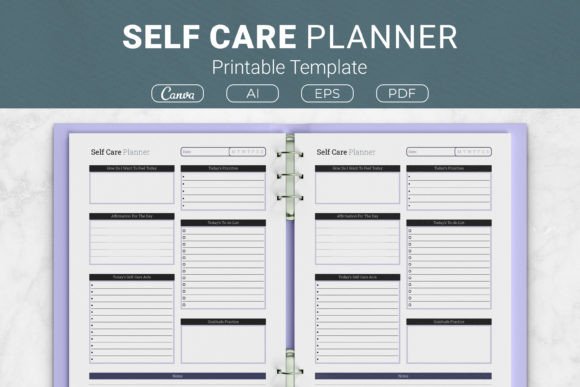
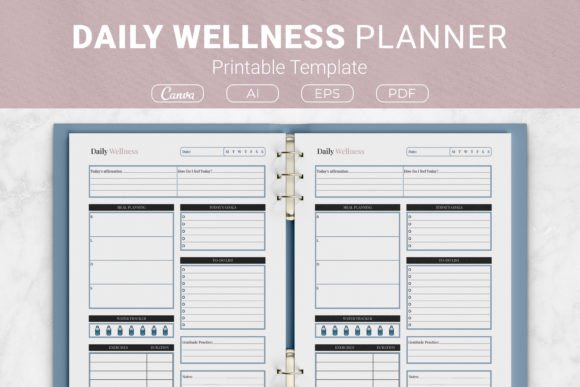
Beyond cognitive benefits, a physical planner offers complete customizability without subscription fees or software updates. You own it. For those interested in self-publishing or creating their own branded wellness products, having access to source files changes everything. Templates that come with Ai Illustrator files, EPS formats, and ready-to-print PDFs mean you can modify layouts, adjust colors, or add your own branding before printing. This flexibility matters whether you're creating a single copy for personal use or preparing a larger run for a community program.
The Anatomy of an Effective Wellness Tracking System
What separates a generic notebook from a purpose-built Wellness Planner is intentional design. Each section should earn its place by prompting reflection or action on a specific dimension of well-being. Let's walk through the core components that make these planners genuinely useful.
Affirmations and Mindset Foundation
Starting the day with an affirmation might feel awkward at first, but the practice has roots in cognitive behavioral techniques. By consciously choosing a statement that counters negative self-talk, you're essentially priming your brain to look for evidence that supports that belief throughout the day. The planner provides a dedicated space for this, removing the friction of having to come up with a prompt from scratch. Over time, flipping back through weeks of written affirmations creates a powerful record of your evolving mindset.
Mood Tracking as Emotional Data
Most of us think we know how we generally feel, but memory is notoriously unreliable when it comes to emotional states. Mood tracking transforms subjective experience into observable patterns. After a month of consistent entries, you might notice that your energy dips every Wednesday afternoon or that you consistently feel more optimistic on days when you've moved your body. That's actionable information, not just passive observation. A Daily Wellness Planner makes this tracking straightforward with simple scales that don't require lengthy journaling.
Meal Planning with Intention
Meal planning in a wellness context goes beyond calorie counting. It's about noticing how different foods affect your energy, focus, and mood. The planner includes space to map out meals without turning eating into a stressful math exercise. You plan breakfast, lunch, and dinner, perhaps jotting down a note about how you felt after eating. This gentle awareness often leads to better choices without the rigidity that makes so many nutrition plans unsustainable.
Goal Setting That Actually Sticks
Vague goals produce vague results. A well-designed planner breaks down goal setting into actionable steps. Rather than writing "exercise more," you define what that looks like this specific week. Maybe it's three twenty-minute walks. The Daily Wellness Planner gives you space to set these intentions and then check in on them daily. The satisfaction of marking something complete triggers a small dopamine release, reinforcing the behavior you're trying to build.
The To-Do List That Respects Your Capacity
Endless to-do lists create anxiety, not productivity. Within the planner, the daily task section is deliberately sized to encourage prioritization. You can't list fifty things, and that's the point. You focus on what genuinely needs to happen today, leaving room for the unexpected. This constraint is actually freeing—it forces discernment about what truly constitutes an essential task versus busywork masquerading as productivity.
Gratitude Practice Grounded in Reality
Gratitude journaling works, but only when it feels authentic. The gratitude section in a wellness planner shouldn't pressure you to feel thankful for grand, sweeping blessings. Often the most meaningful entries are small and specific: the way sunlight hit your kitchen table, a brief conversation that made you laugh, the fact that you finally fixed that squeaky door. Specificity is what trains the brain to scan for positive moments rather than defaulting to threat detection, which is our evolutionary wiring.
Exercise Tracking Without the Gym Bro Energy
Movement tracking in a Daily Wellness Planner is refreshingly moderate. You're not logging one-rep maxes unless you want to. This section is about noticing how physical activity, in any form, contributes to your overall well-being. A twenty-minute stretching session counts. A walk during your lunch break counts. The goal is consistency over intensity, and the planner reflects that philosophy through its low-pressure layout.
Format Flexibility for Different Lifestyles
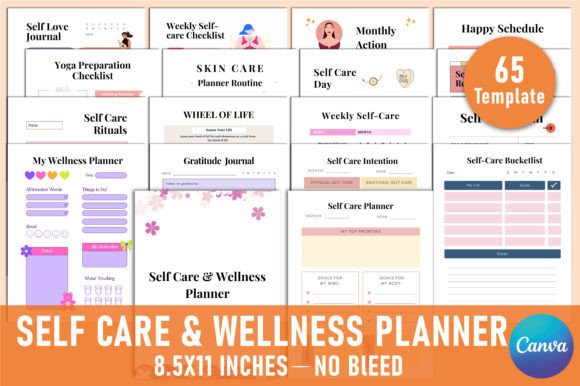
One size rarely fits everyone, which is why the availability of multiple size formats becomes genuinely useful rather than just a marketing bullet point. The US Letter 8.5 x 11 inch version gives you plenty of writing room and works beautifully in a three-ring binder system. If you prefer something that travels well, the A4 210 x 297 mm fits European binders and filing systems naturally. For those who want something more compact, the 7.5 x 9.25 inch and 6 x 9 inch options slip easily into a bag without adding bulk.
This range of sizes matters because your wellness practice needs to adapt to your actual life, not the other way around. A planner that's too large won't leave your desk. One that's too small will frustrate you when you try to write meaningful entries. Having the source files means you can even test different sizes before committing to a full print run, which is invaluable for self-publishers on platforms like Kindle Direct Publishing.
Self-Publishing and the KDP Opportunity
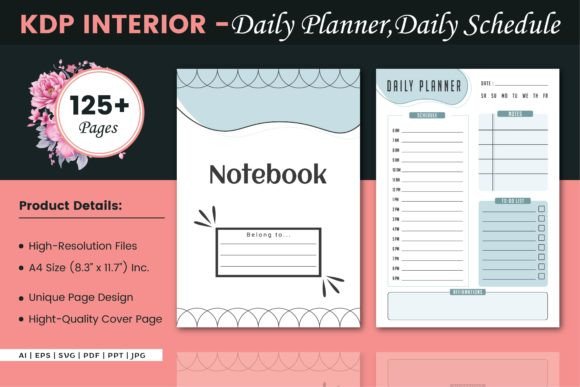
For creators and entrepreneurs, the Daily Wellness Planner template package opens doors in the print-on-demand space. KDP planners have become a substantial niche on Amazon, and wellness is one of the most consistently searched categories. The included EPS file and Ai Illustrator files give you complete editing control. You can modify interior pages, add your own branding, adjust the layout, and create something that stands out in a crowded marketplace—all without starting from a blank canvas.
The PDF files ready to print mean you can also take a simpler route. Upload directly, set your pricing, and publish. For those still learning the design side, the Canva template link provides an accessible entry point. Canva's drag-and-drop interface lets you make adjustments without professional design software. This tiered approach—from fully editable Illustrator files to user-friendly Canva templates—makes the package adaptable to different skill levels and business goals.
Personal Use Scenarios That Make a Difference
Let's talk about real-world application. You print the planner at home, three-hole punch it, and slip it into a binder alongside your other life management tools. Each morning, before checking email or scrolling social media, you spend ten minutes with your planner. You write an affirmation that resonates with a current challenge. You check in with your mood—maybe you're at a six today, and that's okay. You review what you planned to eat and adjust based on what's actually in the fridge. You pick three tasks that matter. You note one thing you're genuinely grateful for. You decide on some form of movement, even if it's just stretching during a conference call.
This ritual takes less than fifteen minutes but shifts how you approach the hours that follow. The evening check-in, perhaps another five minutes, closes the loop. How did you actually eat compared to your plan? How did your mood shift? What got done, and what can wait until tomorrow? This bookend approach creates a sense of completion that quiets the restless mind before sleep.
Reducing Stress Through Tangible Progress
Anxiety often stems from a sense of drift—the feeling that you're busy but not moving forward on anything that matters. A Wellness Planner counters this by making progress visible. When you can flip back through weeks of entries and see consistent streaks in your mood tracking, completed goals, and expressions of gratitude, you have concrete evidence that you're doing better than you might feel on any given day. This objective record becomes especially valuable during low periods when your brain is inclined to dismiss your efforts as insufficient.
Stress reduction isn't about eliminating challenges. It's about building resilience and perspective. The act of writing down what's weighing on you as a to-do item externalizes it. The problem moves from swirling in your head to sitting on a page where you can look at it with some distance. That small shift makes problems more manageable.
Building Consistency Without Perfectionism
A common trap with any wellness tool is all-or-nothing thinking. Miss a few days and suddenly the planner feels like a testament to your failure rather than a support system. The key is remembering that the planner serves you, not the reverse. Blank days don't erase the value of filled ones. If anything, those gaps tell their own story about busy periods or times when you needed a different kind of support. A Daily Wellness Planner works best when approached with curiosity rather than judgment.
Recommitting is always available. You don't need a new planner, a new month, or a Monday. You just open to today's page and start again. That resilience—the ability to resume without punishment—is itself a wellness skill worth cultivating, and the planner gives you a structure to practice it repeatedly.
Choosing the Right Format for Your Needs
Before printing or publishing, consider where and how you'll use the planner most consistently. If you work primarily at a desk, the letter or A4 size gives you room to write expansively. If you're frequently mobile, the smaller formats travel better. For KDP publishers, consider your target audience. A compact 6x9 planner might appeal to busy professionals who value portability, while the larger format could attract those who prefer a more journal-like experience.
The beauty of owning the source files is that you can experiment. Print a few pages at different sizes. See what feels right in your hands. Make adjustments to spacing or section prominence based on what you find yourself using most. This iterative approach ensures the final product, whether for personal use or commercial sale, actually meets real needs rather than assumptions.
Wellness isn't a destination you arrive at. It's a daily practice of paying attention and making small choices that compound over time. A Daily Wellness Planner provides the scaffolding for that practice, turning good intentions into consistent actions without requiring heroic willpower or expensive programs. Whether you print it for your own binder or publish it for others, the tool is straightforward in concept but profound in impact when used with patience and self-compassion.