Circle Journal Interior: A Unique Foundation for Low-Content Books
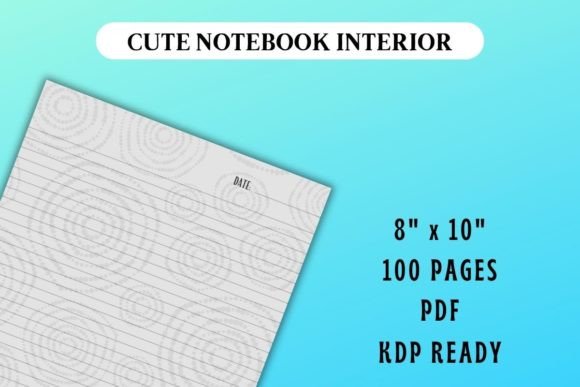
Imagine opening a blank notebook and feeling an immediate spark of possibility before you even reach for a pen. That is exactly the kind of quiet magnetism a Circle Journal Interior brings to your next print-on-demand project. Designed as a ready-to-upload digital PDF, this beautiful and unique interior transforms a simple low-content book into an experience—one that feels intentional, artistic, and gently structured. With 100 pages sized at a generous 8 by 10 inches, the file invites your customers into a world where circular motifs guide writing, sketching, planning, and reflection. And because it’s a digital download, you skip the hassle of formatting and design tweaks; you simply upload and publish.
What sets this interior apart is its commitment to organic flow. Straight lines and rigid grids have their place, but circles evoke a sense of wholeness, continuity, and natural rhythm. When your end user opens a journal built around circular elements, something subtle shifts in their creative process. They are not just filling in blanks—they are moving with the shape, following arcs, clustering ideas, or mapping connections in a way that feels playful yet focused. This isn’t about gimmicks; it’s about offering a gentle alternative to the tyranny of the square.
Why Circles Change the Journaling Game
We often underestimate how much page architecture shapes thinking. A standard lined notebook encourages linear lists, while a dotted grid suggests modular freedom. A circle-based interior nudges users toward radial thinking—brainstorming in clusters, tracking cycles, or simply doodling without the pressure of left-to-right order. For many, this shape carries symbolic weight: mandalas, life wheels, seasonal rhythms, and even the daily arc of sunrise to sunset. When you build a KDP low-content book around this design, you aren’t just selling paper; you’re offering a mindset tool.
Consider a few immediate applications:
- Gratitude journals where daily entries spiral out from a central date or prompt.
- Habit trackers arranged as circular wedges, turning progress into a visual ritual.
- Dream logs that map symbols and emotions around a core dream image.
- Mindfulness workbooks using concentric rings to layer thoughts, sensations, and intentions.
- Creative sketchbooks where blank circle fields encourage experimentation with mandalas, doodles, or circular collages.
The key advantage is that you don’t need to design any of these niches from scratch. The PDF is already formatted as a complete interior—100 pages of the same circular layout, ready to become anything you imagine. You decide the cover, title, and niche, and the interior does the heavy creative lifting for the person who fills its pages.
From Download to Bookstore in Hours
Speed and simplicity matter for publishers, entrepreneurs, and side hustlers. With this Circle Journal Interior, there is no learning curve. Once you purchase the digital file, you can upload it directly to Kindle Direct Publishing, IngramSpark, Lulu, or any similar platform that accepts standard print-ready PDFs. The 8 by 10 inch trim size is widely supported, and the PDF meets technical specifications without bleed or margin guesswork. Because the interior is ready exactly as it is, you can finalize a listing, attach your cover file, and have a product live the same day.
This low-friction workflow is ideal for anyone who wants to test multiple book ideas quickly. Perhaps you experiment with a “Morning Circle” guided journal for coffee lovers, then pivot to a “Cycle Sync” wellness tracker using the same PDF base. Because the interior is versatile, you can create a whole product family without ever touching design software. Each version stands on its own through positioning and packaging, yet the production effort remains minimal. That’s a game-changer for small publishers building a streamlined catalog.
Creative Niches That Benefit from Circular Layouts
While any journal can incorporate circular design, certain niches feel especially at home here. Let’s explore a few directions that pair beautifully with the circle theme.
Spiritual and Reflective Journals
Circles have long been associated with unity, cycles, and meditation. A soul-work journal built on this interior gives users space for daily check-ins that radiate outward: a core intention in the center, surrounded by rings for mood, energy, insights, and action steps. The format gently encourages holistic self-examination. Similarly, tarot or oracle journal enthusiasts might record cards in a circular wheel, noting relationships between drawn cards through proximity rather than rigid columns.
Planners and Productivity Companions
At first glance, planners seem wedded to grids and timelines, but goal setting thrives in circular formats. A wheel of life worksheet split into eight or twelve segments becomes a powerful monthly review tool. Users color or shade each wedge to represent satisfaction levels, then note priorities in the outer ring. When repeated across pages, it creates a layered self-coaching record. Even simple daily pages can feature a central focus circle with space for to-do lists spiraling outward.
Creative Portfolios and Process Notebooks
Artists, designers, and illustrators often warm up with circular gestural sketches. An entire notebook devoted to circular exploration—whether as a warm-up repository or a formal pattern design journal—taps into that need. Interior designers, quilters, or surface pattern creators can use it to prototype repeat motifs, color palettes in pie-chart form, or circular branding elements. Because the PDF is black-and-white and printer-friendly, the interior doesn’t compete with the colors your user adds; it supports them.
Educational and Workshop Materials
Educators running creativity workshops, writing retreats, or team-building sessions can adapt the circle concept into printable handouts. The interior functions as a workbook: brainstorming wheels, character relationship maps, or circular timelines for history lessons. Because the product is digital, facilitators can print as many copies as needed without ongoing cost, making it an eco-friendly alternative to consumable workbooks.
Making the Most of 8x10 Real Estate
The 8 by 10 inch size is no accident. It’s large enough to give circular elements room to breathe without feeling cavernous, yet compact enough to fit comfortably on a desk or lap. Each page of the Circle Journal Interior uses this space to balance negative and positive areas. Ample margins prevent content from drifting into the gutter after binding, and the circle placement invites natural hand positioning—no more cramped edges or awkward rotations.
For your customer, that translates into a more enjoyable writing experience. A circle floating with generous white space around it signals calm; it invites slow, deliberate use rather than rushed scribbles. As a publisher, you can highlight these ergonomic and aesthetic perks in your product description. Talk about “breathing room for your thoughts” or “spacious pages that let your ideas expand naturally.” These details matter when buyers compare dozens of generic notebooks.
Keeping the Interior Clear and User-Friendly
One concern with template-based interiors is that pre-printed designs can clutter rather than assist. The best low-content interiors walk a fine line: enough guidance to spark creativity, but not so much that it stifles personal expression. This circle-based PDF strikes that balance. The linework is clean, subtle, and consistent across all 100 pages. There are no unnecessary decorations, heavy borders, or distracting fonts. That simplicity means the end user can impose their own style—watercolors, bold markers, fine liners, or digital pens if they print and then scan.
If you plan to market the finished book to a specific audience, consider including a single instruction page or example spread at the front (you can add this as a separate file or overlay page when you combine cover and interior, though the interior itself remains untouched). For instance, a short line like “Start at the center and let your thoughts ripple outward” can orient users without breaking the clean aesthetic. But even without such guidance, the circular field is intuitively understood, which is why it works across cultures and languages.
Consistency Meets Originality
There’s a common misconception that using a pre-made interior limits originality. In reality, it frees you to focus on what truly differentiates your book: the thematic niche, the cover design, the marketing story, and the supplemental content you might bundle (like a digital guide or community access). Since hundreds of low-content publishers compete on Amazon, a unique interior style gives you an edge, but that edge multiplies when you pair it with a razor-sharp brand voice.
Consider naming conventions. Instead of “Circle Journal,” a title like “Radial Mindfulness: A 100-Day Circular Journal for Creative Unfolding” immediately signals a distinct angle. Add a cover that echoes the interior’s circular motif with watercolor spirals or celestial circles, and you’ve created a cohesive product that feels entirely original—even though the interior PDF came ready-made. This approach combsatisfies both the pragmatic need for speed and the human desire for beauty and meaning.
Simple Steps to Upload-Ready Success
Here’s a quick checklist to ensure your Circle Journal Interior project sails through the KDP review process and shines on the marketplace:
- Download and review the PDF immediately. Flip through all 100 pages virtually to confirm the layout is exactly what you imagine.
- Design a compelling cover that complements the interior aesthetic. Use similar circular motifs, subtle textures, or colors that evoke your niche mood.
- Write a category-specific description that highlights not just the circle theme but the transformation your book offers—stress relief, creative flow, organization, etc.
- Set a competitive price based on the 8x10 page count and typical print costs for that trim size. Remember, 100 pages keeps the book light enough to feel accessible while still offering substantial value.
- Upload to your chosen platform, attach the PDF as the interior file, and order a proof copy to feel the paper and binding in hand. The tactile quality of a well-printed circle often surprises creators.
Once the book is live, gather feedback. Your customers might reveal unexpected ways they are using the circular pages—and those insights can fuel your next product spin-off, whether that’s a lined version, a pre-colorized edition, or a companion deck of circular prompt cards.
Who Should Grab This Interior Today?
In short, anyone who wants to publish a low-content or no-content book that stands quietly apart. Freelancers adding a physical product to their brand ecosystem, coaches offering journals as client tools, artists launching a merch line, or bloggers packaging their philosophy into a guided workbook—all can leverage this interior. It’s equally valuable for the first-time publisher testing the KDP waters and the seasoned seller refreshing a stale catalog.
Because the file is digital and non-rivalrous, you can reuse the same PDF for multiple book concepts, each with a different cover and target audience, without paying additional licensing. This one-time investment stretches across genres and markets. The beautiful and unique KDP interior becomes a renewable resource, and your only limit is how creatively you frame it.
The circle, after all, is a shape without beginning or end. In a world saturated with rigid frames, offering something that feels continuous and open is a quiet act of design rebellion. Your readers will feel it every time they open the cover. And as a creator, you get to watch a single smart purchase ripple outward into a growing line of thoughtful, connected products.