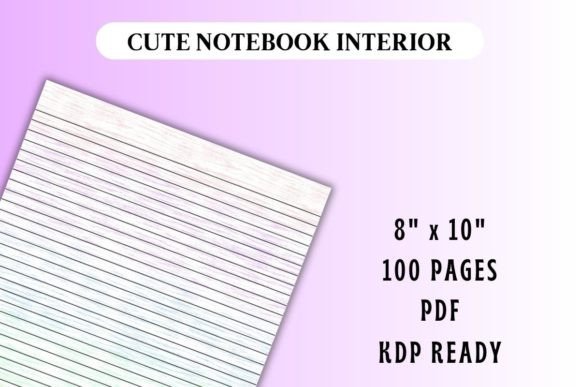
Understanding the Abstract Watercolor Journal Interior 5 for Low-Content Publishing
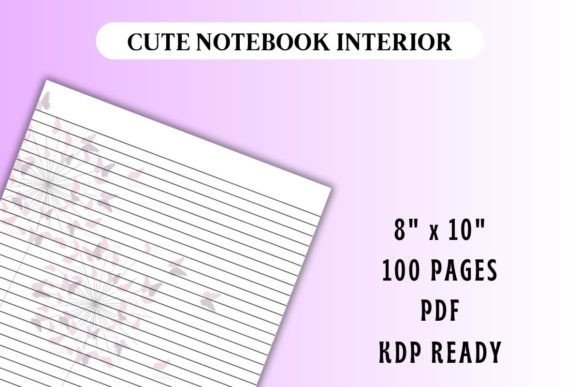
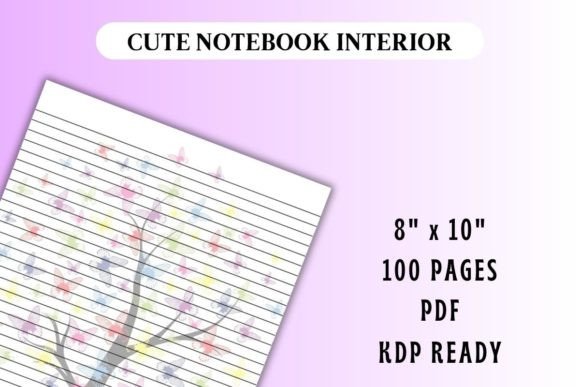
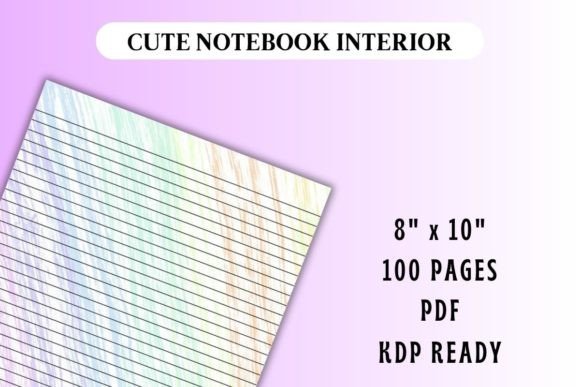
Choosing the right interior design can determine whether a print-on-demand notebook succeeds or gets lost among thousands of similar products. The Abstract Watercolor Journal Interior 5 offers a practical solution for creators who want to launch beautiful journals without spending hours on page design. This digital product includes 60 ready-to-upload PDF files, each containing 100 pages of abstract watercolor backgrounds sized at 8 × 10 inches. You receive no physical item—simply download the files and use them immediately as the interior for your next KDP, Etsy, or other self-publishing project.
What Makes This Interior Collection Stand Out
At its core, Abstract Watercolor Journal Interior 5 provides variety. Rather than a single design repeated across a book, you get sixty distinct visual directions. Some files lean into soft, pastel washes reminiscent of morning skies; others use deeper, moodier pigment blends that suit reflection-focused journals. This range allows you to create a full product line—such as a series of gratitude notebooks or art journals—while maintaining a cohesive watercolor identity that appeals to shoppers drawn to handcrafted aesthetics.
The 8 × 10 inch trim size is deliberate. It’s a standard format accepted by Amazon KDP and other major platforms, which simplifies the upload process and keeps production costs predictable. At 100 pages per file, each interior hits a sweet spot: substantial enough to feel like a real book, but not so heavy that printing becomes expensive or the spine too thick for common binding options. For low-content publishers testing price points, this page count often aligns well with customer expectations for journals in the $7–$12 range.
Practical Value for Print-on-Demand Creators
Time is the most constrained resource for many indie publishers. Abstract Watercolor Journal Interior 5 addresses this by removing the front-end design work. You can open a PDF, confirm it meets your needs, pair it with a cover designed in Canva or Photoshop, and upload—all within a single work session. The files are formatted as print-ready PDFs, so they bypass the formatting hurdles that often delay DIY interior creation. For someone managing a catalog of dozens or hundreds of SKUs, this speed translates directly into the ability to test new keywords and niches without committing days to each interior.
Because you own the files, reuse is unlimited. A single purchase of the digital pack can populate multiple book listings over time. One publisher might use a floral-leaning watercolor file for a line of wellness journals, then later grab a stormy blue variant for a creative writing notebook. The asset scales with your output, which makes it especially cost-effective for serial publishers who launch new titles regularly.
Quality and Presentation Across 60 Design Sets
The watercolor artwork appears organic rather than digitally artificial. Brush strokes, pigment blooms, and subtle color gradients create a hand-painted feel that elevates the perceived value of the final printed book. Many low-content interiors rely on heavily repeating patterns or overly simplistic vector shapes, but the abstract nature of these designs allows each page to feel intentionally artful without distracting from the user’s writing or sketching.
Consistency is also a strength. Each of the 60 PDFs follows the same 100-page, 8 × 10 inch structure, so once you verify the technical specs for one file, the others will align. Page backgrounds are likely full-bleed or near full-bleed, which adds visual impact when a reader opens the book. However, it’s wise to double-check whether the files include necessary bleed margins for your specific printing platform. While the product is marked ready to upload, KDP’s bleed requirements can vary slightly by trim size, and a quick pre-flight check in a PDF viewer prevents rejection notifications later.
Flexibility and Real-World Applications
Abstract Watercolor Journal Interior 5 doesn’t lock you into a single genre. The abstract aesthetic works for mindfulness journals, dream diaries, travel logs, gratitude books, sketchbooks, and even wedding guest books. For instance, an entrepreneur selling guided self-reflection journals could select a calm sage-green design, overlay their own lined or dotted inserts using a simple PDF editor, and create a hybrid interior that feels bespoke. Because the watercolor backgrounds are abstract rather than thematic (no seasonal imagery, no specific motifs), they adapt to many niches without forcing you into a corner.
For those who prefer a purely blank canvas, the files likely contain undecorated space—ideal for free-form journaling. If you need structured layouts, you may need to add lines, grids, or prompts separately. That’s a fair trade-off: the product gives you a stunning artistic foundation, leaving you the freedom to layer functional elements as your audience demands.
Who Will Benefit Most from This Interior Pack
The primary user is an independent publisher or small business owner active on KDP, Etsy, or similar platforms. They want a polished, professional interior without commissioning a custom watercolor artist or mastering design software. Marketers launching branded notebooks for a campaign, educators creating classroom creativity journals, and bloggers developing product tie-ins will also find value. Even a serious hobbyist who wants to print a one-off personal journal can use a single file, but the real leverage comes when you deploy multiple designs across a catalog.
If your workflow rewards speed and consistency, consider how the 60-file variety can support rapid A/B testing. You might upload the same cover design with two different interiors—one light, one dark—to gauge which aesthetic drives more sales in a specific subcategory. This type of low-risk experimentation is difficult when each interior needs to be built from scratch.
Considering the Limitations Objectively
No digital interior pack fits every scenario. Because the watercolor artwork is baked into the PDF pages, you cannot easily recolor or significantly alter the designs without raster editing software and a re-export process that may degrade quality. If your brand requires precise color matching or specific hex codes, you could find this restrictive. Similarly, some watercolor backgrounds may appear darker in print than on screen, which could reduce readability if the user writes directly over a heavily pigmented area. Ordering a physical proof or printing a test page at home helps you verify how your chosen ballpoint or gel pen performs on the textured background.
The product also does not include editable source files, so you won’t have layered Photoshop or Illustrator documents to tweak. This is standard for ready-to-upload interiors, but it’s worth noting if you tend to heavily customize page elements. Additionally, the 100-page count means a journal printed from these interiors will have exactly 100 sheets. If your brand typically offers 120-page journals, you would need to accept the page count as-is or manually insert blank pages, which can affect the spine width calculation when setting up the cover.
Integrating Abstract Watercolor Journal Interior 5 into a Publishing Workflow
To get the most from the pack, start by browsing the 60 files and noting which color palettes and brushstroke styles fit your current product roadmap. Group them mentally: perhaps five files suit a “calm and peaceful” niche, another ten align with a “bold creative expression” series. Create a checklist and pair each interior with a specific keyword theme and cover concept before uploading anything. This disciplined approach turns a large collection of assets into a structured product launch sequence.
Next, check each PDF’s internal metadata and page orientation. The files should be portrait, but confirm that any watercolor elements don’t inadvertently include text or watermarks that would appear unprofessional. If possible, run a few pages through a print-on-demand simulator to see how colors translate to paper. This due diligence takes minutes but protects your seller account from quality complaints.
When preparing covers, account for the 8 × 10 inch trim size and a spine width based on 100 pages of cream or white paper—KDP’s cover calculator handles this easily. The abstract watercolor interior already sets a visual tone; you can echo it with a complementary cover design, or contrast it deliberately to make the book stand out among search results.
Long-Term Value and Strategic Use
Abstract Watercolor Journal Interior 5 is fundamentally a reusable library of creative assets. Once downloaded, the files remain in your toolkit indefinitely. This gives you the freedom to pivot quickly when you notice a trending niche—for example, if “astrology journal” begins climbing in search volume, you can select a cosmic-feeling watercolor design, create a relevant cover, and publish within a day or two. The interior doesn’t become outdated because abstract watercolor art isn’t tied to a specific trend season.
For established publishers considering the product, think of it as a way to diversify your catalog without adding design overhead. You might already sell lined journals; adding a handful of products with these atmospheric backgrounds could attract buyers who prioritize aesthetic experience alongside functionality. And because you aren’t committing a large upfront investment in custom art, the financial risk per new listing remains low.
Ultimately, the worth of this interior collection depends on how you leverage its strengths. If your goal is to publish attractive, print-ready notebooks with minimal friction, Abstract Watercolor Journal Interior 5 provides a versatile, high-quality foundation. If you need deep editability or very specific layout elements, you may still need supplementary tools. Either way, evaluating the files against your actual production requirements—instead of aspirational ones—gives you a clear picture of where they can carry the weight and where you might still want to add your own touch.