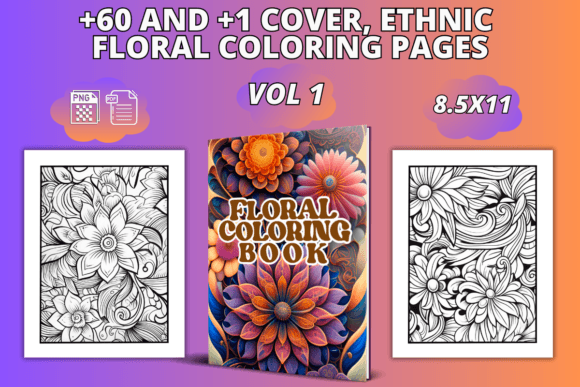
Turning Ethnic Floral Coloring Pages VOL 1 Into a Functional Asset for Publishing, Relaxation, and Creative Workflows
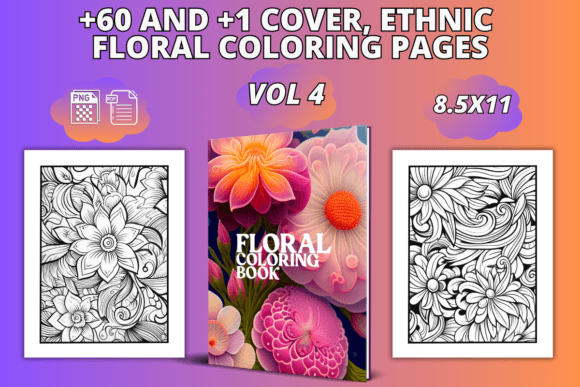
Coloring books have moved beyond a simple childhood pastime. For independent publishers, content creators, and entrepreneurs using print-on-demand platforms like Amazon KDP, a ready-made interior template is a practical shortcut. Ethnic Floral Coloring Pages VOL 1 delivers a bundled resource of 60 psychedelic floral designs, formatted to 8.5″ x 11″ paper with no bleed, specifically engineered for low-content or no-content book production. This is not a vague collection of decorative images. It is a pre-structured asset that slots into a repeatable publishing workflow, removing the friction of sourcing, testing, and formatting individual graphics.
The broader utility extends across multiple user profiles. An adult looking for a meditative coloring experience needs clean, intricate linework. A KDP publisher requires print-ready files that do not cause returns or quality complaints. A therapist or educator may want culturally inspired patterns for engagement sessions. This volume serves all three because the underlying file format accommodates diverse output paths. The product ships as a zip file containing a PDF, 60 high-quality PNG papers, and a cover file. Each component maps to a specific task in a production or personal use pipeline.
Understanding the Package Before Starting a Project
Every creative or commercial project begins with asset inspection. Before designing a cover layout, uploading to a print-on-demand dashboard, or printing pages for personal use, you need clarity on what the zip file actually contains. The structure is straightforward but worth examining in practical terms.
The PDF file operates as the master interior. Because the pages are sized to 8.5″ x 11″ with no bleed, you avoid the common headache of adjusting margins for full-bleed artwork. No-bleed formatting means the designs sit comfortably within standard printer margins, reducing crop alignment issues. When you upload this PDF to KDP or a similar platform, the previewer will not flag design elements cut too close to the edge. That single factor saves hours of trial-and-error corrections for first-time publishers.
The 60 PNG files serve as individual page assets. High-quality PNGs with transparent or clean backgrounds give you the freedom to rearrange the order, drop pages into different projects, or use them outside of book publishing. A graphic designer might pull individual flowers or patterns for branding elements, while a content creator could use a single page as a printable lead magnet. The high-quality cover PNG further accelerates the publishing pipeline, providing a starting point that requires only text overlay and minor customization.
For those integrating this into a low-content book business, the inspection phase also includes verifying DPI and resolution consistency. All files are output-ready, meaning no pixelation at standard print dimensions. Confirming this early prevents customer complaints and return rate spikes.
Where Ethnic Floral Coloring Pages Fit in a Publishing Workflow
KDP publishing for coloring books generally follows a sequence: idea generation, niche research, interior sourcing, formatting, cover design, upload, and launch. Interior sourcing is often the bottleneck. Commissioning original artwork is costly and slow. Licensing stock vectors adds complexity with attribution and usage terms. Ethnic Floral Coloring Pages VOL 1 removes the bottleneck by providing a full interior with commercial usability included in the purchase model.
The most efficient implementation happens when you treat this volume as a pre-validated interior. The psychedelic floral theme appeals to an adult coloring audience that values intricate, culturally textured patterns over simple cartoonish designs. That positioning matters during the niche research phase. When evaluating keyword data for phrases like "ethnic coloring pages for adults" or "psychedelic floral coloring book," you are targeting a buyer segment that overlaps with stress relief, mindfulness, and artistic expression categories.
Once the interior is selected, the no-bleed format simplifies cover design synchronization. You can design a front and back cover that matches the 8.5″ x 11″ trim size without accounting for bleed extension calculations. The included PNG cover file provides a visual anchor, and tools like Canva, Photoshop, or Affinity Publisher can layer text and branding elements on top. The workflow becomes linear: download, inspect, optionally reorder pages, assemble cover, upload, and publish. There is no artwork commissioning loop or back-and-forth with freelancers.
Using the Volume Beyond Book Publishing
Not every user of this product intends to publish on Amazon. Many professionals integrate coloring assets into service-based workflows. A therapist might print select pages for clients working on mindfulness or grounding techniques. The ethnic floral patterns, with their rhythmic repetition and cultural motifs, provide a structured yet creative focus. Unlike generic mandalas, these designs carry a visual language that can resonate across different cultural contexts.
Educators and workshop facilitators can extract individual pages for group activities. The 60-page volume provides enough variety to avoid repetition in a multi-session program. Because the PNG files are high-quality, printing a single page at a time maintains crisp lines without degradation. Organizing the pages into themed packets—perhaps grouping by pattern density or motif complexity—adds a layer of intentionality to the facilitation plan.
Content creators building online communities around coloring or art therapy can use the assets as exclusive community bonuses. Offering a curated set of five pages to email subscribers, or using them in paid membership tiers, aligns with the practical realities of digital product delivery. The clean PNG format makes this frictionless.
Practical Implementation for Consistent Results
Consistency across projects matters more than a single successful upload. If you plan to build a brand around low-content books, your interiors need uniform sizing, margin behavior, and print quality. Ethnic Floral Coloring Pages VOL 1 standardizes those variables at 8.5″ x 11″ with no bleed. Using the same product across multiple volumes or related titles creates a cohesive catalog. A customer who buys one book and appreciates the print quality will expect the same experience from another title under your brand.
One implementation pattern that works well involves creating series. You might release a volume focused specifically on Ethnic Floral Coloring Pages for Kids as a companion product. The psychedelic intensity can be moderated for younger audiences, but the core workflow remains identical. By maintaining the same trim size and bleed setting, you reduce the cognitive overhead of switching between project specifications. The series strategy also improves cross-promotion opportunities within Amazon's ecosystem, where related titles appear together organically.
From a quality control standpoint, running a test print before finalizing the KDP upload is a small but impactful step. Print two or three pages on standard home printer paper to check line clarity and spacing. Because the source files are high-resolution PNGs, any issues at the test stage likely point to printer settings rather than asset quality. Confirm that your print settings do not scale the image or add margins. The no-bleed format means you want the page to print exactly as sized, with natural white space around the design area.
Organizational Habits That Protect Long-Term Use
When you acquire a 60-page resource, file management becomes a practical concern. Unzipping into a chaotic downloads folder without renaming or categorizing files leads to redundant searches later. A small upfront organization effort pays dividends. Create a project folder structure that separates the PDF, individual PNGs, and cover file. Label the folders clearly, and if you plan to use the volume across multiple projects, consider creating copies organized by intended output.
For those who design covers externally, embedding the cover file into a layered design document preserves the ability to iterate across releases. If you publish a second edition or a related volume, having the original cover asset organized and accessible shortens the design cycle. The same logic applies to marketers who might repurpose a page for social media content. Tagging files with relevant keywords helps with quick retrieval months after the initial download.
Integrating the Resource with Other Tools and Platforms
The product fits within a broader ecosystem of tools that publishers and creators already use. For interior formatting, the PDF is ingestion-ready for KDP's upload interface. For those who prefer to assemble interiors in design software, the individual PNGs provide a flexible alternative. Programs like Adobe InDesign or Scribus can place each page into a master document, allowing for pagination, copyright pages, and title inserts. The advantage of the PNG route is the ability to insert blank pages, rearrange the sequence, or intersperse with other design elements without re-exporting the entire PDF.
On the cover side, the high-quality PNG integrates with Canva templates, Photoshop, or the Kindle Create tool. If you use Kindle Create, the cover file slots in during the final build step. The key is matching the optical tone of the cover to the interior. A psychedelic interior benefits from a cover that reflects that energy, so using the provided cover asset as a base layer, then adjusting saturation, contrast, and typography, produces a cohesive final product.
For physical product sellers who expand into Etsy or Shopify stores, the same files can generate printable bundles sold as digital downloads. Many sellers list individual coloring pages or curated sets for prices ranging from a few dollars to higher tiers for complete volumes. The commercial flexibility of the assets supports multiple monetization pathways without additional licensing complexity.
Adapting the Volume for Different Audiences
While Ethnic Floral Coloring Pages VOL 1 is designed with adult users in mind, the files can support broader audience targeting. The Ethnic Floral Coloring Pages for Kids variant adjusts complexity levels while retaining the cultural diversity of the patterns. If you work with both adult and children's niches, maintaining a shared visual vocabulary across products builds subtle brand recognition. Parents who color alongside their children often seek complementary books, and offering both age-range options through your catalog captures that behavior.
The practical modification involves reviewing the 60 pages and identifying which ones translate well to a younger demographic. Some patterns may be too dense or intricate; flag those entries and consider offering a curated subset or a simplified edition. The underlying workflow for preparing the kids' version mirrors the adult volume, so publishing both becomes a matter of selection rather than an entirely new process.
Key Factors for Sustainable Use and Repeatability
Sustainability in a low-content publishing operation depends on repeatable processes. Every time you create a new coloring book, you should not be reinventing the asset pipeline. Volumes like this become building blocks. Knowing that the files are formatted correctly, print-tested, and organized reduces the startup cost of each new project. The initial download and inspection take minutes, and from that point forward, the production cycle reduces to cover design and upload.
Another factor is cross-platform compatibility. Because the files are PDF and PNG, they work across Windows, macOS, and Linux environments without proprietary software lock-in. This matters for teams or collaborators who may use different systems. A virtual assistant handling uploads, a designer working on covers, and a reviewer checking print proofs can all access the files without conversion issues.
For users focused on personal wellness rather than publishing, the sustainability factor translates to having a deep library of ready-to-print pages. Instead of buying individual coloring books repeatedly, you maintain a folder of high-quality designs that can be printed on demand with any paper stock you prefer. The ability to select specific pages based on mood or time available adds a personalization layer that pre-bound books cannot offer.
Making Informed Decisions Around Usage Rights and Deliverables
Before finalizing any commercial project, understanding what the package allows is essential. The zip file structure and file types indicate a template-aware product designed for commercial use. The presence of a cover PNG alongside interior pages signals that the creator expects buyers to use the assets in finished products. For KDP publishers, this means you can upload the interior and create a book for sale without running afoul of usage terms.
For those who prefer extreme caution, keeping a copy of the original zip file with your purchase record provides documentation. In the unlikely event of a platform review, having the source files and transaction history clarifies rights ownership. This is a minor practice that protects long-term inventory stability on platforms with periodic audits.
The deliverables are complete on arrival, but the intelligent user audits the asset count. Sixty pages plus a cover file matches what was purchased. Confirming this upon download—counting files, checking image dimensions, verifying PDF page count—fits into a quality-assurance mindset that prevents downstream surprises. Taking five minutes to verify saves hours of re-uploading or customer service responses.
Ultimately, Ethnic Floral Coloring Pages VOL 1 works as a plug-and-play component for coloring book creation, a therapeutic printable library, or a community engagement tool. The specific value in each case depends on how cleanly the user integrates it into their existing process. The files are production-grade. The execution rests on organized habits, realistic audience targeting, and a willingness to treat asset management as part of the creative work itself.