Monthly Bill Payment Tracker Organizer
When you run a small business, freelance from your kitchen table, or juggle multiple creative projects, staying on top of monthly expenses can feel like a second job. A Monthly Bill Payment Tracker Organizer isn't just a notebook with columns — it's a practical system that helps you see exactly where your money goes, when payments are due, and how your spending patterns shift over time. This particular organizer, designed as a KDP interior with large print and a generous 10-year tracking span, brings a level of clarity that digital apps often fail to deliver.
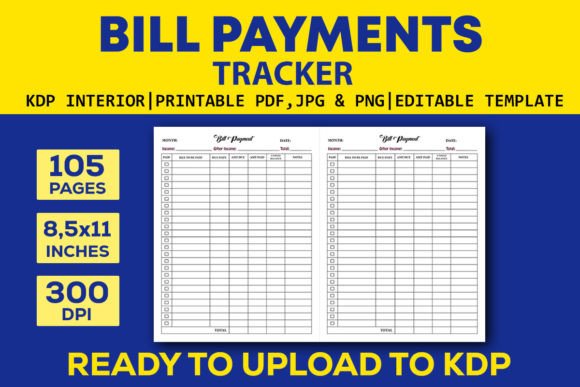
What sets this organizer apart is its thoughtful balance between structure and simplicity. The 8.5 x 11-inch trim size gives you enough room to write without cramping entries, while the 105-page count keeps the book manageable rather than overwhelming. Large print makes it accessible for quick glances during busy mornings, and the no-bleed layout ensures every page looks clean whether you're using a ballpoint pen or a fine-tip marker. The visual personality leans toward functional minimalism — no distracting flourishes, just well-spaced grids and clearly labeled sections that guide your eye naturally from one entry to the next.
Who Benefits Most from a 10-Year Expense Tracking System
Ten years sounds like a long commitment, and that's exactly the point. For entrepreneurs tracking business expenses across multiple revenue streams, having a decade of data in one place reveals patterns that quarterly reviews miss. A freelance graphic designer, for example, might notice that software subscription costs spike every September — and realizing that trend early allows for smarter annual budgeting. Small business owners can compare year-over-year utility costs, identify seasonal fluctuations, and make more informed decisions about when to invest in equipment upgrades or marketing pushes.
Beyond the business world, this organizer serves a quieter but equally important purpose for households. Parents managing multiple extracurricular activity fees, property tax schedules, and insurance premiums can track everything in one central location. The large print format is especially helpful for older adults who want to maintain financial independence without squinting at tiny spreadsheet cells. Content creators and bloggers who treat their platforms as businesses will appreciate having a dedicated space to log platform fees, hosting costs, and equipment purchases separately from personal expenses.
The Visual and Functional Appeal of Large Print Layouts
Large print isn't just an accessibility feature — it's a design choice that changes how you interact with information. When numbers and categories have breathing room on the page, your brain processes them more efficiently. There's less visual fatigue during end-of-month reconciliation sessions, and fewer errors when transferring figures from receipts or bank statements. The 8.5 x 11-inch format also means each monthly spread feels substantial rather than cramped, which psychologically reinforces the importance of the tracking habit you're building.
The high-resolution 300 DPI files included in the package ensure that when you print these pages — whether at home or through a professional service — every line is crisp and every header is legible. The no-bleed design means you don't lose content near the binding edge, a common frustration with poorly formatted interiors. For KDP publishers, having source files in AI, PDF, EPS, JPG, and PNG formats alongside editable Adobe InDesign files gives you complete control over customizing the interior for different audiences or branding it with your own publishing imprint.
Where This Organizer Fits into Your Creative and Professional Workflow
Designers and publishers often think of planners and trackers as separate from their core creative work, but they're actually foundational tools. When you're launching a new product line, planning a course curriculum, or managing client retainers, the financial side either supports or undermines your creative momentum. Having a physical tracker sitting on your desk serves as a gentle accountability mechanism — it's harder to ignore than a buried app notification.
For marketers and brand strategists, tracking monthly expenses across campaigns provides concrete data that informs future budget allocations. You can note which months required heavier ad spend, when freelance copywriters were hired, or how print material costs fluctuated. Over a 10-year span, this becomes an invaluable reference for pitching to clients or justifying budget increases to stakeholders. The organizer's straightforward layout also makes it easy to share with accountants or business partners without lengthy explanations.
Digital Files and Print Flexibility for Publishers
If you're a KDP publisher or content creator looking to offer value to your own audience, the included file formats dramatically reduce your production time. The ready-to-upload PDF means you can publish immediately, while the editable InDesign file lets you swap cover designs, adjust interior fonts, or add branded headers. Having high-resolution JPG and PNG files on hand also opens up possibilities for creating social media previews, product listing images, or promotional mockups without needing to recreate anything from scratch.
How a Physical Tracker Influences Financial Awareness
There's a documented cognitive difference between typing numbers into a screen and writing them by hand. The physical act of recording each bill — writing the payee name, the amount, the due date, and the confirmation number — engages memory pathways that passive scrolling doesn't activate. Over time, you start to internalize your recurring expenses. You'll catch a subscription you forgot to cancel or notice a utility bill that crept higher than usual before it becomes a pattern.
Consistency in tracking also builds a professional habit that carries over into other areas of business. When you're disciplined about logging expenses, you tend to become more disciplined about invoicing clients, following up on late payments, and setting aside funds for quarterly taxes. The organizer's 10-year structure reinforces long-term thinking — you're not just closing out one month at a time, you're building a financial archive that tells the story of your business or household growth.
Choosing the Right Format for Your Needs
Before committing to any planner or tracker, think about how you actually work. Do you prefer spiral-bound books that lay flat, or do you need something you can three-hole punch and store in a binder? The 8.5 x 11-inch size of this organizer works well for both approaches. If you're printing at home, the no-bleed design means standard printer settings will produce clean results without trimming. For those who plan to use the digital files to create a commercial product, the inclusion of EPS and AI formats ensures compatibility with professional printing workflows.
Consider readability carefully. If you or your end users spend long hours reviewing financial documents, large print reduces eye strain significantly. The font choices in the interior — which you can modify using the editable files — should prioritize clarity over decoration. Sans-serif typefaces around 12-14 points tend to work best for table-heavy layouts, though the final call depends on your audience's preferences and any branding guidelines you're following.
Testing and Pairing Visual Elements
When customizing this interior for your own brand, test how different fonts interact with the existing grid structure. A clean geometric sans-serif for headers paired with a slightly more traditional serif for body text can create a subtle hierarchy that guides readers through each section. If you're targeting a more modern, minimalist audience, stick to a single typeface family with varied weights. The editable InDesign file makes experimenting with these combinations straightforward — you can generate sample pages, print them out, and see how they feel in actual use before committing to a final design.
Practical Considerations for Commercial Use
Licensing is one of those topics that's easy to overlook until it becomes a problem. The files included with this organizer are intended for commercial use within KDP and similar platforms, but always verify the specific terms if you plan to distribute the printed product through other channels. Having AI and EPS source files is particularly valuable because they're resolution-independent — you can scale elements without quality loss if you decide to adapt the interior for different trim sizes or formats later.
For bloggers and content creators who want to offer a free printable version as a lead magnet, the high-resolution JPG and PNG files let you create attractive preview images that accurately represent the interior quality. Just be mindful of how much you share publicly if you're also selling the full product elsewhere. A sample month spread gives potential buyers enough to evaluate without giving away the complete 10-year system.
Building a Long-Term Tracking Habit
The most beautifully designed organizer in the world won't help if it sits unused on a shelf. The key to making this tool work is tying it to an existing routine. Keep it next to your laptop during weekly admin sessions. Fill it out while you're reviewing bank statements. Set a recurring calendar reminder for the first and fifteenth of each month — or whatever cadence matches your bill payment schedule. The 105-page count, spread across 10 years, breaks down to roughly 8-9 pages per year for monthly tracking, which feels approachable rather than daunting.
Over time, the accumulated data becomes more than just a record of payments. It becomes a reference you can consult when negotiating vendor contracts, planning for seasonal cash flow gaps, or preparing documentation for loan applications. A decade of consistent tracking demonstrates financial responsibility in a way that scattered receipts and vague memories never could. Whether you're a publisher creating a product for your audience or an individual looking to bring order to your monthly finances, a well-designed tracker like this one turns a mundane chore into a meaningful practice.