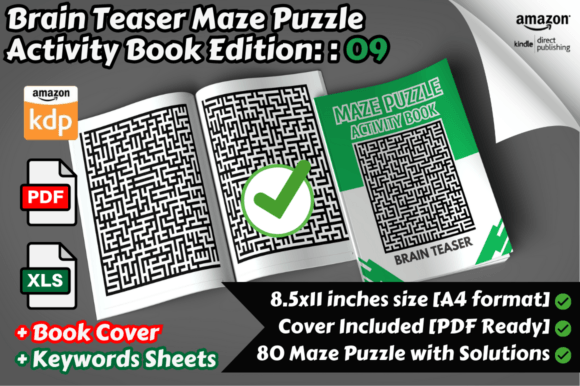
Maze Puzzle Activity Book Edition 09
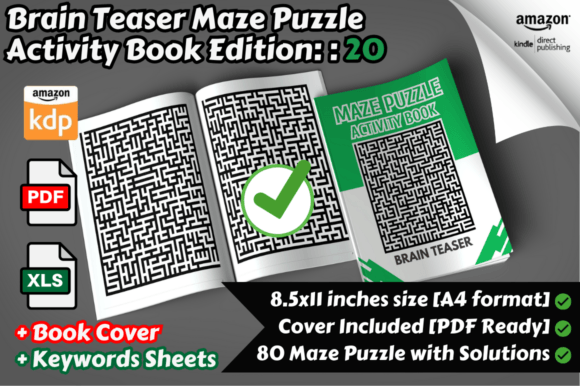
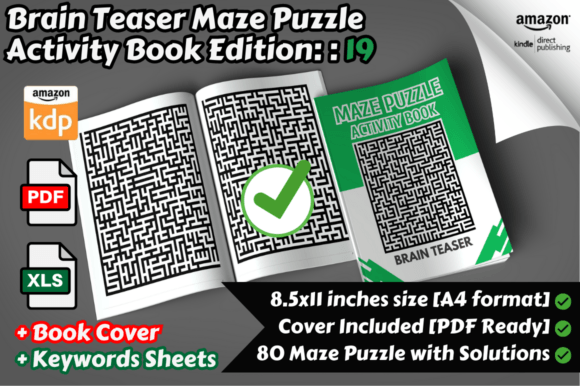
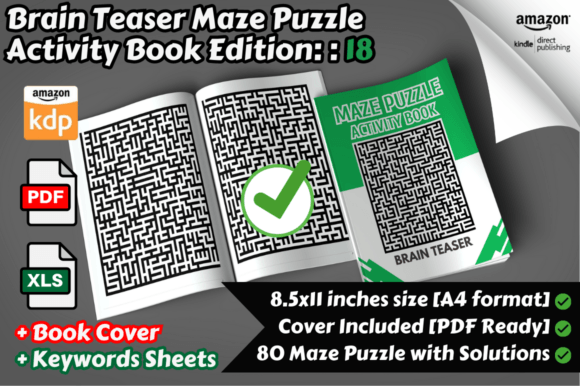
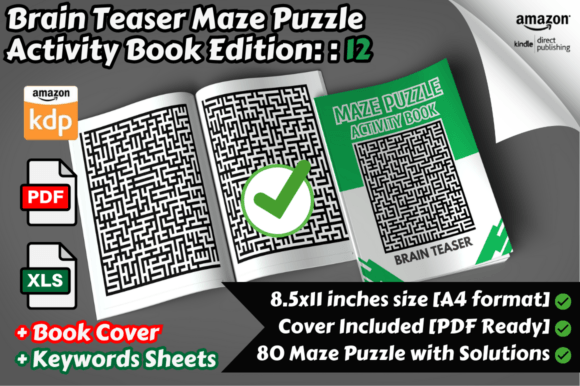
If you believe a maze is just a childhood pastime, Maze Puzzle Activity Book Edition 09 will change your perspective fast. This 160-page PDF interior file packs 80 fully designed labyrinth puzzles and a separate 80-page solution section, all scaled to a generous 8.5×11 inch trim size. The collection goes beyond casual entertainment—it’s a foundational resource for creative professionals, educators, publishers, and anyone who wants to turn brain-teasing content into something practical, profitable, or simply more engaging.
What Makes This Maze Book a Versatile Resource
At its core, the book delivers a straightforward structure: 80 pages of original maze puzzles, followed by 80 pages of clear, easy-to-follow solutions. Every maze is resolution-ready, meaning no fuzzy lines or awkward scaling when printed. The layered PDF format lets you isolate just the puzzle pages or the solution section, which matters a lot when you’re repurposing content for different projects.
The design style leans toward clean, high-contrast linework—immediately usable for both print and digital display. Because the solutions are self-contained, end users never have to flip chaotically through the document. Instead, they get a calm, frustration-free solving experience. That small organisational detail makes a significant difference in classrooms, therapy sessions, and even in high-value lead magnets where polish builds trust.
Key structural features:
- 160 total pages (80 puzzle pages, 80 dedicated solution pages)
- 8.5 x 11 inches — standard letter size for easy home and commercial printing
- Separation of puzzles and answers — reduces accidental cheating and keeps the brain workout honest
- Ready for black-and-white interior printing — cost-efficient for bulk runs and print-on-demand setups
Whether you just want a screen-free brain break or you intend to turn the file into a branded product, this layout gives you the flexibility to start tinkering immediately.
Creative Ways to Use the Puzzle Collection Across Industries
Maze Puzzle Activity Book Edition 09 isn’t confined to one type of user. Its real value surfaces when you look at it through different professional lenses. Below are some grounded examples that illustrate how various audiences can adapt the same 80 puzzles to meet specific goals.
A Classroom Catalyst for Cognitive Development
Teachers and homeschool educators consistently search for activities that strengthen logical reasoning and fine motor control without feeling like a test. The mazes fit perfectly. Print a stack of puzzles for early finishers or create a weekly “mindful maze” challenge that builds spatial awareness over time. Since the solutions are separate, you can hand them out only after genuine effort—turning a quiet solo task into a mini lesson about persistence.
For students with attention difficulties, the clean line art eliminates visual clutter and reduces overstimulation. You can also scale the pages down to fit half-letter exercise books, making them portable and less intimidating. Pair the maze with a short reflection prompt (“What strategy did you use when you hit a dead end?”) and you have a low-prep critical thinking station that works across multiple grade levels.
A Designer’s Springboard for Custom Branded Products
Designers frequently need adaptable interiors for client projects, especially in the low and medium content publishing space. The maze book provides a solid structural template. You can extract individual puzzle pages, overlay your client’s brand colours, or modify the start and finish icons to match a campaign theme. Because the PDF is cleanly built, importing it into illustration software for customisation is straightforward.
Imagine packaging five of these mazes as part of a wellness retreat workbook, or weaving them into a quarterly printed magazine as a brain-teaser column. The consistent line style across all 80 puzzles means that even after light modification, the collection holds together visually. For e-commerce store owners, creating a digital “Mindfulness Maze Mini-Kit” becomes a matter of selecting pages, adding a branded cover, and exporting a new PDF—all without starting from scratch.
KDP and Print-on-Demand Entrepreneurs
Publishers working through Amazon KDP or other print-on-demand platforms will recognise the immediate utility of a ready-made interior. Maze Puzzle Activity Book Edition 09 is essentially a turnkey product core. After you add a unique cover, a title page, and perhaps a short copyright section, the file is ready for upload. The separate solution pages already anticipate customer expectations—buyers of puzzle books often complain when answers are missing or poorly organised, so having them clearly marked reduces return rates and negative reviews.
If you’re building a catalogue of niche puzzle books for adults (seniors, commuters, stress relief seekers), you can mix and match maze pages with other puzzle types across your line. Even better, use Edition 09 as a template to maintain visual consistency across future titles. Keep the trim size, margin structure, and line weight identical, and your brand will feel cohesive rather than pieced together.
Marketers and Content Creators Building Engagement
A single maze makes an exceptionally effective lead magnet. Offer a free downloadable puzzle as an email sign-up incentive, then follow up with the solution a day later. This simple drip strategy creates multiple touchpoints and gently positions your brand as one that provides genuine, bite-sized value. Because the maze designs are sophisticated enough for adults, they suit industries like coaching, financial wellness, and productivity—fields where audiences enjoy quick mental refreshers.
Social media managers can crop a small section of a maze and invite followers to guess the correct path, turning a static activity into an interactive post. For in-person events, print and laminate a few larger maze sheets as a low-key networking icebreaker. The versatility comes from the fact that you can use a single puzzle without ever depleting the resource.
Practical Tips for Adaptation and Consistency
Adapting a ready-made activity book is only effective if the output remains clear, usable, and professional. Start by checking the bleed and margin settings if you plan to print through a third-party service. Most 8.5×11 inch interiors work well with standard 0.5-inch margins, but always confirm against your printer’s specifications to avoid cut-off elements.
When using the solution pages for a separate answer booklet or an online resource, consider adding subtle navigation cues: a small arrow or page number reference that links back to the puzzle. Little usability touches like this make a big difference for elderly users or those new to digital puzzles. If you choose to modify the mazes, maintain consistent line weight and avoid overly decorative borders that distract from the path-finding challenge. The originals are already balanced; too much embellishment can push a puzzle from thoughtful to chaotic.
For those who want to add branding, place your logo discreetly in the footer or include a short “brought to you by” message on the solution page. This preserves the solving experience without turning it into an ad. Similarly, if you’re compiling several puzzle books into a series, keep a style guide: same font for instruction text, consistent placement of page numbers, and uniform spacing between maze walls. Buyers will unconsciously register the polish and return again.
Designing for Your Audience: Clarity and Usability First
No matter how creatively you repurpose the maze book, the end-user experience must remain the priority. A maze that’s too cramped or printed at low resolution can strain eyes and reduce the satisfaction of completion. With Maze Puzzle Activity Book Edition 09, the original files are designed for crisp output, but it’s worth testing a sample page before committing to a large batch. Print one puzzle at actual size, run a pencil through it, and feel how the spacing holds up. If you plan to use the PDF digitally on tablets, check that the line art remains sharp when zoomed in.
Organise any derived products in a logical flow: puzzle first, solution after clear section break. If you’re using only a subset of pages for a project, consider renaming PDF files descriptively (e.g., “maze_03_medium.pdf”) so you can locate specific difficulty levels later. This small organisational step saves hours if you ever plan to create a second edition or a spin-off book. And if you’re selling the end product, include a brief note about the cognitive benefits—this not only adds perceived value but also helps buyers understand why a quiet maze activity belongs in their daily routine.
Maze Puzzle Activity Book Edition 09 earns its place on your resource shelf not because it’s flashy, but because it’s endlessly adaptable. Whether you’re crafting a classroom exercise, launching a new KDP title, or building an email sequence that people actually open, the same 80 puzzles provide a dependable foundation. Work with them as-is, or shape them into something distinctly your own—either way, you start with a thoughtful design that puts clarity and solvability at the centre of the experience.