Green Leaf Journal Interior: A Ready-to-Use Foundation for Your Next KDP Creation
There is something quietly satisfying about holding a notebook that feels carefully considered. Not just the cover, which often gets all the attention, but the inside — the part you actually spend time with. The Green Leaf Journal Interior exists for precisely this reason. It is a thoughtfully designed interior layout that you can take, upload as is to Kindle Direct Publishing or any other print-on-demand platform, and turn into a finished book without touching a single design tool. For anyone who has wrestled with formatting pages, aligning margins, or second-guessing font choices, this ready-made solution changes the entire experience of bringing a low-content or no-content book to market.
What makes this particular interior stand out is not just its convenience but its aesthetic sensibility. The leaf-inspired theme brings an organic calmness to the page. It is subtle enough to work across different niches while distinctive enough to give your finished book a recognizable personality. Whether you are building a brand around mindfulness, nature, personal organization, or simply beautiful stationery, the Green Leaf Journal Interior provides a consistent, professional backbone that would otherwise take hours to construct from scratch.
What Exactly Is a KDP Interior and Why Does It Matter?
For those newer to the world of print-on-demand publishing, the term interior refers to the inside pages of a book. In a novel, this would be the typeset text. In a low-content book — think journals, planners, sketchbooks, logbooks, and notebooks — the interior is the repeating page layout that users write on, draw on, or fill in. Getting this layout right is surprisingly important. Uneven margins, awkward line spacing, or elements that sit too close to the binding edge can make a book feel amateurish before anyone writes a single word.
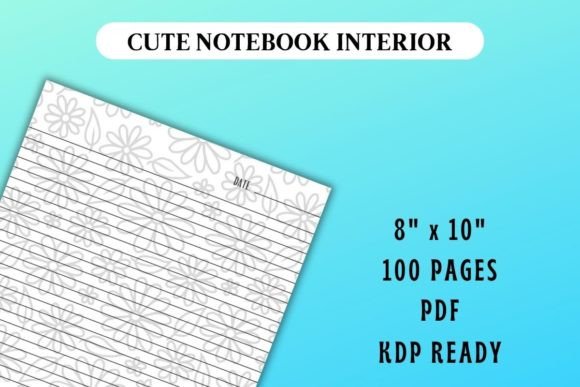
The Green Leaf Journal Interior removes these concerns entirely. It arrives as a single PDF file, precisely formatted at 8 x 10 inches across 100 pages, with every element already positioned where it should be. You do not need to adjust bleed settings, worry about safe zones, or test print a dozen versions. The file is built to KDP's specifications, meaning you can upload it directly and order a proof copy within minutes. For creators who value time and consistency, this is a substantial advantage.
Inside the Design: What the Green Leaf Journal Interior Actually Delivers
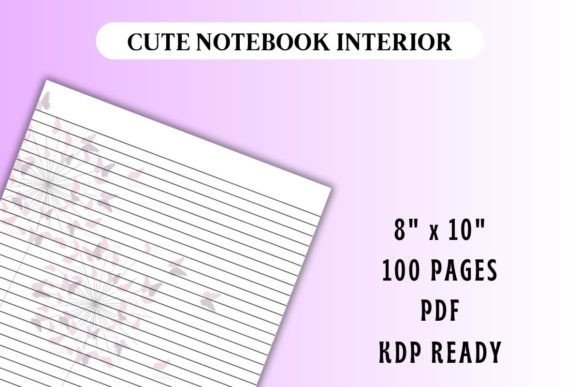
Let us walk through what you will find when you open the PDF for the first time. The interior carries a botanical character that is gentle without being overly decorative. Leaf motifs frame or accent the pages in ways that feel integrated rather than pasted on. This is important because low-content interiors walk a fine line. Too plain, and the book feels generic. Too busy, and it distracts from the user's own writing or drawing. The Green Leaf Journal Interior lands in that sweet spot where design supports function.
Each of the 100 pages follows a consistent structure. The layouts are clean, with clear writing areas and thoughtful use of negative space. Lines, when present, are evenly spaced and easy on the eyes. Margins account for binding, so nothing disappears into the spine. The 8 x 10 inch trim size feels substantial in hand — large enough to write comfortably, compact enough to carry without awkwardness. This is a size that works well for desk journals, creative notebooks, and even light planner use.
The Botanical Theme and Its Versatility
One of the first questions a creator might ask is whether a themed interior limits their audience. With the Green Leaf Journal Interior, the theme is more of an undercurrent than a loud statement. The leaf elements read as natural, calm, and universally appealing. They pair beautifully with nature-themed covers but also complement minimalist designs, wellness brands, and even professional-looking notebooks intended for everyday use. The green motif carries associations with growth, renewal, and clarity — qualities that many journal buyers actively seek.
Because the interior is delivered as a finished digital file, you maintain full control over how you package it. Pair it with a bold typographic cover for a modern look, or wrap it in watercolor artwork for a softer, more artistic presentation. The interior remains consistent, giving you a reliable foundation upon which to build varied product lines.
Who Benefits Most from a Ready-to-Upload Interior?
The short answer is anyone who wants to publish without becoming a designer first. But let us break that down further, because different people come to KDP with different goals.
- The entrepreneur testing a niche. You have an idea for a journal that serves a specific audience — perhaps gardeners, herbalists, or mindfulness practitioners. You want to validate the concept quickly without investing in custom design work. The Green Leaf Journal Interior lets you launch fast and see if the demand exists before committing to bespoke interiors.
- The creative who wants to focus on covers. Some people love designing covers but find interior formatting tedious or technically frustrating. With the interior handled, you can pour your energy into the part you actually enjoy, knowing the inside pages meet professional standards.
- The busy professional diversifying income. Maybe you already sell other products and want to add a physical journal or notebook to your lineup. A ready-made interior removes the barrier of learning new software or hiring freelancers for a single product.
- The complete beginner. If terms like bleed, trim, and margin still feel foreign, starting with a proven interior file shortens the learning curve dramatically. You learn the publishing process with one less variable to manage.
In each of these scenarios, the Green Leaf Journal Interior serves as a shortcut to a polished result. It does not replace creativity; it supports it by handling the structural work so you can direct your attention elsewhere.
Practical Considerations Before Uploading to KDP
Even with a ready-made interior, understanding a few practical details will help you get the best results. The file provided is a standard PDF, which is exactly what KDP expects for interiors. When you upload, the platform will check for errors such as font embedding issues or margin violations. Because the Green Leaf Journal Interior is built to specification, these checks typically pass without incident. Still, it is wise to always use KDP's online previewer after uploading. Flip through every page virtually to confirm nothing shifts unexpectedly.
Another consideration is paper choice. KDP offers white and cream paper options. The interior's green leaf elements and line work will render slightly differently on each. White paper yields crisper contrast, which can make botanical details pop. Cream paper softens the overall look and feels warmer, which some buyers prefer for a journal meant to evoke natural, earthy qualities. Neither choice is wrong, but ordering a proof copy in both paper types can help you decide which better matches your vision for the final product.
Understanding the 100-Page Structure
One hundred pages is a deliberate choice for this interior. It is substantial enough to feel like a real book — not a pamphlet — but not so thick that printing costs become prohibitive or the spine feels unwieldy. For a lined journal, 100 pages provides roughly 200 writing surfaces when counting both sides, which is a familiar, expected quantity for consumers. If you ever want to create versions with different page counts, the PDF format allows you to duplicate or remove pages before uploading, giving you flexibility without requiring design skills.
How the Digital Nature of This Product Changes the Workflow
It bears repeating that the Green Leaf Journal Interior is a digital download. No physical item ships to you. Within minutes of purchase, you have the PDF file on your computer, ready to upload. This immediacy is particularly valuable for creators who move quickly or work in bursts of inspiration. There is no waiting for a designer, no back-and-forth revision cycles, no unexpected delays. The file is the finished product, and you control when and how you bring it to market.
Because the download is a single PDF, file management stays simple. You can store it, duplicate it, rename it for different projects, and even modify it slightly in a PDF editor if you feel comfortable doing so. Some sellers use the same interior across multiple cover designs to create cohesive product families. Others use it as a one-off for a signature journal that anchors their brand. The digital format supports all of these approaches equally well.
Comparing Ready-Made Interiors with Custom Design Work
A question worth addressing is how a product like the Green Leaf Journal Interior compares to commissioning a custom interior from a freelance designer. Both paths have their place, and the right choice depends on your circumstances.
Custom design gives you complete control over every detail. You can specify exact line spacing, choose bespoke illustrations, and create something entirely unique to your brand. This level of customization can be valuable for flagship products or highly differentiated niches. However, custom work takes time and costs significantly more. A single interior design project can run into hundreds of dollars and require weeks of communication and revision.
A ready-made interior offers speed, affordability, and proven structure. You sacrifice some uniqueness in the internal layout, but for many low-content niches, this trade-off makes complete sense. The end consumer is buying the book for its purpose — to write, plan, sketch, or track — not primarily for the internal design flourishes. What matters most to them is usability, and the Green Leaf Journal Interior delivers that in a package that still carries more personality than a plain lined page.
Realistic Expectations and Potential Limitations
No product is perfect for every situation, and being clear about limitations helps you make an informed decision. The Green Leaf Journal Interior is designed for low-content and no-content books — journals, notebooks, and similar products where the user provides most of the content. It is not suitable for books with heavy text, complex layouts, or content that requires precise alignment with the leaf design elements. The interior is also fixed in its 8 x 10 inch trim size. While you can technically scale a PDF, doing so changes margins and may introduce formatting issues that violate KDP requirements. Using the file at its intended size is strongly recommended.
Additionally, because this is a digital product sold to multiple creators, the same interior may appear in different books from different sellers. This is standard for the low-content market and rarely poses a problem, as covers, titles, and branding differentiate products far more than interiors do. Still, it is worth knowing if exclusivity is important to your brand strategy.
Bringing It All Together: From File Download to Published Book
Imagine a typical workflow. You have an idea for a journal aimed at people who find peace in gardening or simply appreciate botanical beauty. You source or design a cover that captures this feeling. You download the Green Leaf Journal Interior and open the PDF to confirm it aligns with your vision. You log into KDP, create a new paperback title, fill in the details, upload your cover file, and then upload the interior PDF. The platform processes both files. You launch the previewer, scroll through, and everything looks clean. You set your price, hit publish, and within hours the book is live on Amazon. A few days later, you order a proof copy to hold in your hands. It arrives looking exactly as expected. That is the experience this product is built to deliver — straightforward, predictable, and satisfying.
The Green Leaf Journal Interior does not promise to make you a publishing mogul overnight. What it does is remove a significant obstacle from the creative process. It gives you a beautiful, functional, professionally formatted interior that you can trust. For anyone who has ever felt stuck before they even started, that is a meaningful gift. Building a book becomes less about technical formatting and more about the ideas and designs that make your offering unique. When the foundation is already set, you are free to focus on what matters most: creating something people will love to use.